Ovulation Calendar & Fertility
- 4.8
- Rating
- 5.00M
- Installs
- Free
- Price

 Analysis by App-foxy
Trying to understand your fertile window can feel surprisingly complicated, especially when your cycle does not follow a neat pattern. I tested Ovulation Calendar & Fertility as a practical planning tool rather than treating it as a promise of pregnancy. My overall impression is that it works best as a simple way to organize cycle information, notice patterns, and turn a vague question into a clearer daily routine. It is a free parenting app from Leap Fitness Group, aimed at people who want an accessible ovulation calendar without starting with a more involved fertility platform.
The app is built around a straightforward idea: enter cycle information, follow the calendar, and use the estimated fertile period as one piece of your planning. That makes it approachable for someone who has never tracked before. At the same time, the word “estimated” matters. Calendar calculations can help with awareness, but they cannot account perfectly for every hormonal, medical, or lifestyle change. I would use this app to support observation and timing, not as a diagnostic tool or as a guarantee that conception will happen quickly.
How the calendar feels in everyday use
The first useful quality is its low mental load. A person who is busy, anxious, or new to cycle tracking usually does not want to study a complicated dashboard before recording anything. A calendar-focused app is easier to understand: you provide the information it needs, then return to the predicted fertile days and upcoming cycle dates. That simple rhythm is the main reason I can see this app fitting into ordinary life.
You May Also Like

 AccuWeather: Weather Radar
AccuWeather Review: A Quick, Clear Forecast for Everyday Decisions
For everyday plans, the best forecast is the one you can understand quickly. AccuWeather makes rain timing, radar, and local conditions easy to act on, with a few trade-offs.

 Hill Climb Racing
Why Hill Climb Racing Still Turns Crashes Into One More Run
A tiny car, a bumpy hill and one more upgrade: Hill Climb Racing keeps resurfacing because its simple chaos makes every near-miss feel personal.

 AliExpress - Shopping App
AliExpress Makes Global Shopping Feel Personal, but Shoppers Bear the Risk
AliExpress turns a global marketplace into a pocket-sized discovery engine. Its reach is useful, its shopping loop compelling, and its trade-offs easy to miss.

 Lords Mobile: Kingdom Wars
Lords Mobile Is a Kingdom-Building Routine, Not a Quick Match
A case-by-case verdict on the building, battles, device demands, and social commitments that make Lords Mobile rewarding for some players and exhausting for others.

 PDF Scanner app - TapScanner
TapScanner Makes Paperwork Easier to Capture, Check, and Share
TapScanner makes scanning with a phone feel less like a rescue operation and more like a dependable step in getting work done. Its capture tools are useful, though not flawless.

 Block Blast!
 Shows How Much a Puzzle Game Can Leave Out
A quiet grid game shows why puzzle players increasingly value instant clarity, repeatable skill and low-pressure play—and where the genre still needs to catch up.
More From Our News Desk
View All News


A realistic example would be someone who works changing shifts and does not want to rely on memory. Instead of trying to remember the first day of the previous cycle, she can open the app while commuting, check the current estimate, and make a small note for later. The value is not that the screen magically knows her body. The value is that the app gives her a consistent place to compare what she expected with what actually happened.
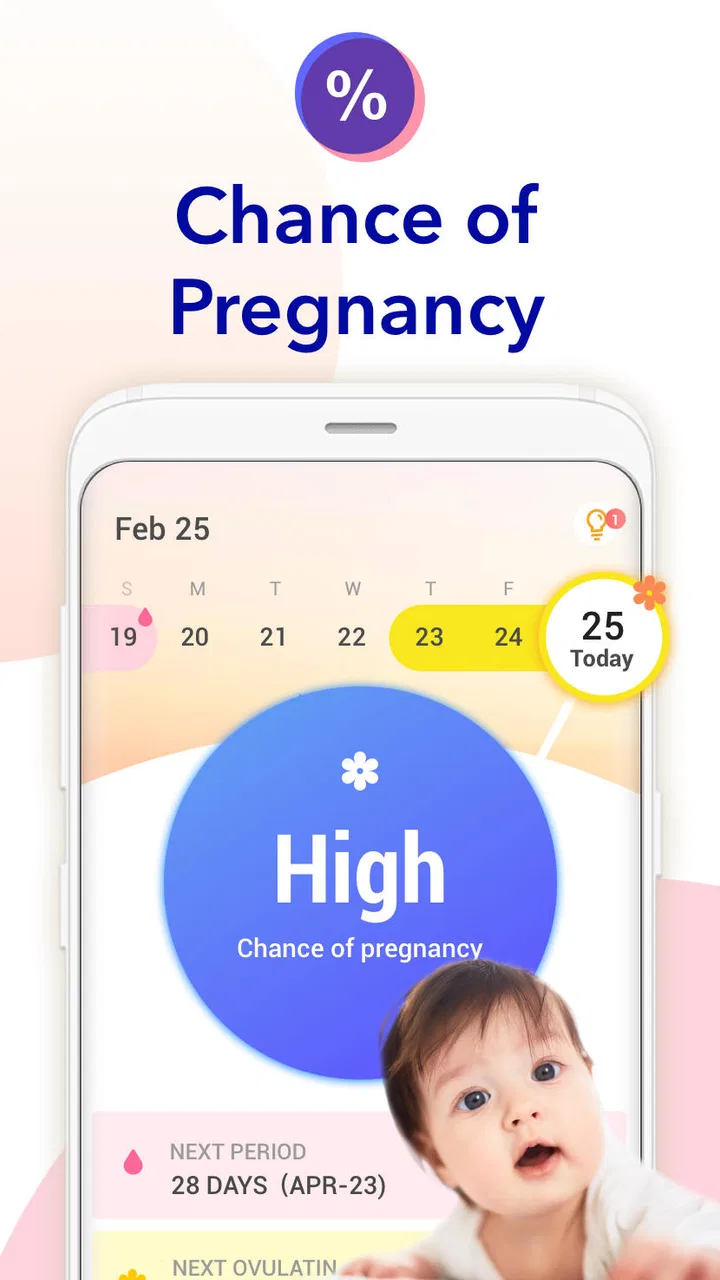
I found that the best way to use a calendar prediction is to treat it as a planning window rather than a single important date. If the app highlights several potentially fertile days, that is more useful than focusing on one supposed “perfect” moment. This reduces the pressure that often comes from fertility tracking and makes the information easier to discuss with a partner.
The app’s store summary emphasizes getting pregnant and understanding the chance of pregnancy, but I would interpret that carefully. A calendar can estimate timing from cycle patterns; it cannot measure ovulation directly. Stress, illness, travel, sleep changes, postpartum changes, and irregular cycles may shift ovulation. If your cycle varies widely, the displayed dates should be treated as a rough guide and not as dependable contraception or medical advice.
What the predictions can and cannot tell you
The most important practical distinction is between a calculated fertile window and evidence that ovulation has actually occurred. Ovulation tests, cervical mucus observations, basal body temperature tracking, and professional medical guidance answer different questions. This app is more convenient than combining several methods, but that convenience comes with less biological detail.
That trade-off makes it a good starting point for a beginner who wants to learn the basic shape of her cycle. It is less suitable for someone who needs close monitoring because of a known condition, very unpredictable periods, fertility treatment, or a medical recommendation. In those situations, I would consider the calendar an additional record at most, while following the method advised by a qualified clinician.
One non-obvious benefit of using the app consistently is that it can help you notice disagreement between the prediction and your real experience. If the expected fertile period repeatedly feels unrelated to your symptoms or cycle timing, that is useful information. It may be a sign that the default calendar approach is not a good fit for you, rather than a reason to keep trusting the estimate blindly.
Using it when the phone is moving between networks
Connectivity shapes the experience in a less obvious way. A fertility calendar is something many people want to check in private, at a doctor’s office, in a changing room, or while traveling. Those are exactly the places where mobile data may be weak or unavailable. I would not build my routine around assuming that every screen or action will behave identically without a connection, because the available product information does not establish a specific offline mode.
My practical advice is to open the app before leaving home, review the dates you expect to need, and avoid making an important decision at the last second in a place with poor reception. If the calendar is available when you need it, the experience feels quick. If a screen depends on loading and the connection is unstable, the same simple task can become frustrating, particularly when you are trying to keep the information discreet.
This matters for travel as well. Crossing time zones or spending a few days away can make any date-based routine harder to follow. I would record the actual start of a period as soon as possible rather than waiting until the trip ends. Keeping that habit is more valuable than obsessing over whether a predicted day has shifted by a small amount.
There is also a privacy angle to connectivity. Fertility information is personal, so I prefer to use the app in a calm setting rather than hurriedly tapping through screens on public Wi-Fi. I cannot turn the app into a privacy guarantee simply because it is a calendar, and I would read its current permissions and privacy information directly before entering sensitive details. A data-conscious user should also avoid sharing screenshots that reveal cycle dates unless that is intentional.
Mobile use: helpful in short sessions, less helpful as a complete record
On a phone, the biggest strength is immediacy. Your device is usually nearby when your period begins, when you remember a symptom, or when you want to check a fertile estimate. That makes a mobile calendar more realistic than a paper chart for people who often forget where they placed their notes. Short, repeated check-ins are easier than a long weekly review.
However, mobile convenience can encourage overchecking. Looking at the prediction several times a day will not make it more accurate. I would choose a small routine: record the relevant cycle event, review the calendar when planning intimacy, and avoid interpreting every ordinary bodily sensation as confirmation. This approach keeps the app useful without allowing it to turn into a source of constant worry.
One workflow I found sensible is to separate three things mentally: what the app predicts, what your body appears to be doing, and what you actually decide to do. The first is a calculation, the second is personal observation, and the third belongs to you and your partner. Keeping those categories separate is a small but important protection against treating an estimate as a fact.
The app may also suit people who want an uncomplicated companion during the first months of trying to conceive. The free price removes a financial barrier for someone who wants to test a basic routine before committing to a more elaborate service. Its Everyone content rating also makes the product broadly approachable, although adults should still be the ones interpreting fertility information and making health decisions.
What happens when a date looks wrong
Failure and recovery are where a calendar app proves whether it is genuinely practical. The most common failure is not necessarily a technical crash; it is an inaccurate prediction caused by an incorrect entry or an unusual cycle. If the dates look strange, my first step would be to check whether the cycle start was entered correctly and whether the recent cycle was unusually early or late.
Do not try to “fix” an uncomfortable prediction by repeatedly changing old entries until the calendar shows the date you hoped for. That produces a cleaner-looking screen but a less trustworthy record. Correct the information based on what actually happened, then allow the estimate to reflect reality. If the pattern remains confusing, that is the point to compare it with another tracking method or ask a healthcare professional.
A second recovery habit is to keep a simple backup memory of important events. I do not mean creating an elaborate spreadsheet. Writing down the first day of a period in a private note can help if the phone is unavailable, the app needs attention, or you accidentally enter something incorrectly. The app should reduce mental effort, not become the only place where your health history exists.
Connectivity problems deserve the same calm approach. If a page fails to load, I would wait until the connection is stable rather than repeatedly tapping buttons or assuming the prediction has changed. If the app behaves unexpectedly after an update, checking the current version and reopening it is sensible, but I would not enter duplicate cycle events simply because the screen was slow. The current release is 1.038.GP, and the app requires Android 6.0 or later, so device compatibility is worth checking before treating a technical problem as a calculation problem.
Data-conscious use without losing the benefit
Fertility tracking asks for information that many people reasonably consider sensitive. My approach is to enter only what is needed for the calendar to be useful, review the app’s privacy choices before building a long history, and avoid sharing account or phone access casually. I would also think about notifications in advance. A reminder that appears on a locked screen may reveal more than you intended, especially if other people use or see your phone.
There is a useful balance between detailed tracking and sustainable tracking. Recording everything can feel thorough, but it may become tiring and lead to abandoned entries. Recording the cycle start consistently is usually more valuable than adding occasional observations that you cannot maintain. If the app offers additional fields during your use, I would add them only when they answer a question you genuinely have.
Another practical tip is to review the calendar with context. A predicted fertile window should be considered alongside recent cycle regularity, travel, stress, illness, and any other change that might affect timing. This does not require medical knowledge; it simply prevents the app’s neat visual calendar from appearing more certain than your real situation.
I also would not use this app as a replacement for contraception. The fact that it estimates a chance of pregnancy does not make the “low chance” days reliably safe. Anyone trying to avoid pregnancy should use an appropriate contraceptive method and seek professional advice when needed. Anyone trying to conceive should seek care if there are concerns about irregularity, pain, or difficulty becoming pregnant rather than relying on a calendar alone.
How it compares with other fertility-tracking choices
Compared with a paper calendar, this app is more convenient for people who want automatic date calculations and a quick view on the phone. Paper has one clear advantage: it does not depend on a battery, app screen, or network situation. A paper record can also feel more private in some households. I would choose paper if my priority were complete simplicity and manual control, but I would choose this app if I wanted the calendar to do more of the date organization.
Compared with a general period tracker, Ovulation Calendar & Fertility feels more focused on the conception question. That focus can be helpful when you do not want a large collection of unrelated wellness features. The trade-off is that a broader tracker may offer a richer long-term record or more ways to log symptoms. If your main goal is detailed menstrual health analysis rather than fertile-window planning, another category of app may suit you better.
Compared with fertility systems that combine calendar estimates with ovulation tests, temperature readings, or connected devices, this app is the lighter option. It is easier to start and costs nothing, but it cannot provide the same depth of evidence. I would recommend the simpler approach for someone learning the basics, while a person who needs more precise monitoring should consider a method that measures more than dates.
The app has attracted a strong audience, with an average rating of 4.8 from around 51 thousand ratings and over 5 million installs. Those figures suggest that many people find the basic concept approachable, but they should not be mistaken for proof that the predictions will fit every body. A popular calendar can still be the wrong tool for an individual with irregular cycles or specific medical needs.
Who should try it, and who should skip it
I would recommend trying it if you want a free, phone-based way to begin tracking, prefer a focused calendar over a complicated fertility dashboard, and understand that the fertile window is an estimate. It is especially reasonable for someone who wants to build the habit of recording cycle starts before deciding whether more advanced tracking is necessary.
I would skip it as a primary method if you need contraception, are undergoing fertility treatment, have highly unpredictable cycles, or need clinical interpretation. I would also skip it if entering sensitive reproductive information into a mobile app makes you uncomfortable. In that case, a paper record or a method recommended by your healthcare provider may give you more control.
People using older Android phones should check compatibility before installing. The minimum operating system is Android 6.0, which keeps the app accessible to many devices but does not guarantee that every older phone will offer the same smooth experience. Since it is free, trying it briefly is relatively low-risk financially, but the real cost can be time and emotional attention if you begin treating every prediction as a verdict.
My connectivity verdict
After using it as a calendar rather than a medical authority, I see Ovulation Calendar & Fertility as a sensible entry point for basic conception planning. Its strongest quality is not complexity; it is the way a simple mobile routine can make cycle timing easier to remember and discuss. The developer, Leap Fitness Group, has positioned it in the parenting space, and the Everyone rating makes it easy for a broad audience to approach.
Connectivity does not define the whole experience, but it affects when the app feels dependable: checking dates in advance, maintaining a consistent record while traveling, and avoiding rushed entries in weak-signal situations all make a difference. I would keep a modest backup note for important cycle starts and treat any loading issue as a technical inconvenience, not as evidence that the biology has changed.
My final recommendation is conditional but positive. If you want a free calendar to help organize fertile-window estimates, it is worth trying. Use it with realistic expectations, protect the privacy of your entries, and compare its predictions with your actual cycle instead of forcing your experience to match the screen. For simple awareness, it can be useful; for diagnosis, contraception, or precise fertility monitoring, I would choose a more appropriate method and professional guidance.
FAQs for Ovulation Calendar & Fertility
01What features does the Ovulation Calendar & Fertility app offer?
The Ovulation Calendar & Fertility app provides a comprehensive set of features designed to help users track their menstrual cycles, ovulation periods, and fertility windows. It includes customizable reminders, detailed cycle analysis, and integration with health apps. Users can also input symptoms and moods to receive personalized insights and predictions.
02Is the Ovulation Calendar & Fertility app accurate?
The app utilizes advanced algorithms to predict ovulation and fertility periods based on user-inputted data. While it provides a high degree of accuracy for many users, it’s crucial to note that individual cycles can vary. For those seeking precise family planning, consulting with a healthcare professional is recommended alongside app usage.
03Can I use the Ovulation Calendar & Fertility app for pregnancy planning?
Yes, the app is specifically designed to aid in pregnancy planning by identifying the most fertile days of the cycle. By tracking ovulation, users can optimize their chances of conception. However, it’s important to remember that the app should be used as a supplement to professional medical advice, not a replacement.
04Is my personal data safe with the Ovulation Calendar & Fertility app?
The app prioritizes user privacy and employs robust security measures to protect personal data. Information entered into the app is encrypted and stored securely. Users can also control sharing settings and opt-out of data tracking if they wish. Always review the app’s privacy policy for detailed information.
05Does the Ovulation Calendar & Fertility app support multiple users or profiles?
Currently, the app is designed for single-user profiles, focusing on personalized insights and data tracking. Users looking to share their information with partners or healthcare providers can often do so via exporting features, but the app does not support multiple profiles within a single account.
Pros
- User-friendly interface enhances navigation.
- Customizable reminders for medication and tests.
- Comprehensive data tracking and analysis.
- Syncs with other health apps for accuracy.
- Provides educational resources and tips.
Cons
- Some features require a premium upgrade.
- Ads can be intrusive in the free version.
- Initial setup can be time-consuming.
- Limited language options available.
- Occasional syncing issues with other apps.

Ovulation Calendar & Fertility
Gallery